The Board of Trustees of the Norwegian EAT Foundation has decided to begin an orderly wind down of the Foundation’s operations in Oslo during 2026, following more than a decade of significant achievements that helped elevate food systems as a central global issue at the intersection of health, climate, nature, and equity.
This decision is taken against a backdrop of profound change in the international donor landscape, where funding priorities and conditions have shifted significantly. The Board concluded that EAT’s current organisational and funding model is not sufficiently resilient for sustainable and ambitious operations in the years ahead.
In parallel, the Board and management are actively exploring new pathways and models with aligned actors and donors to enable selected flagship initiatives to continue and, where possible, scale beyond the current setup. While no concrete arrangements have been agreed at this stage, discussions are ongoing.
Initiated in 2013 and formally established in 2016 as a non-profit foundation, EAT has played a global convening and agenda-setting role in advancing evidence-based approaches to food-system transformation.
Prof. Johan Rockström, EAT Co-Founder said: “EAT has shown what becomes possible when science is connected to decision-makers and doers across the system. The need for evidence-based pathways has not diminished – it has grown.”
Central milestones have been the EAT-Lancet Commissions (2019 and 2025), which advanced science-based targets and guardrails for healthier, more sustainable and just food systems. EAT also supported and helped advance major science initiatives such as the Blue Food Assessment (2023) and the Food Systems Economics Commission (2024), broadening the evidence base on solutions and making the economic case for transformation.
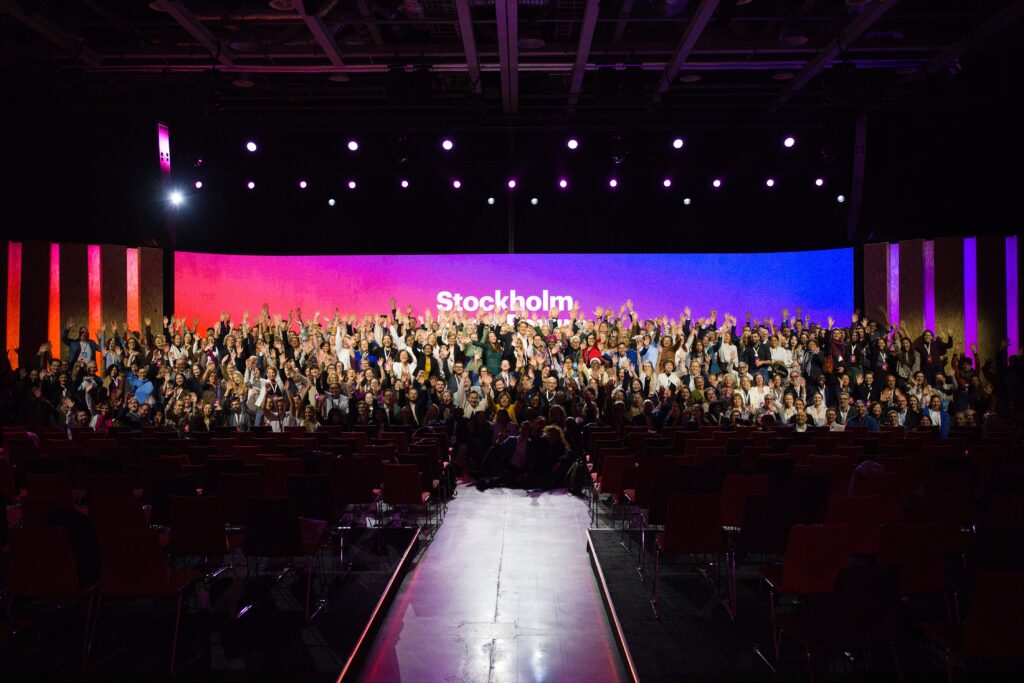
EAT’s convening platforms, including the Stockholm Food Forum, have brought together leaders across sectors. In 2025, EAT and partners launched ten global Communities for Action (CfAs),engaging hundreds of organisations to identify actionable pathways and address systemic barriers to change.
Dr. Gunhild A. Stordalen, EAT’s Co-Founder and Executive Chair, said: “We built EAT to create longer tables, not higher walls – to connect science with people who can drive change. I’m deeply grateful to our team, our science partners, our donors, and everyone across the food system who has contributed time, courage and trust.”
The Board of Trustees and management have agreed on a set of immediate steps to ensure a responsible and well-governed process, starting with the initiation of an orderly wind-down of the Norwegian legal entity.
Tomas A Røen, EAT’s CEO said: “EAT’s achievements could not have been accomplished without the professionalism, dedication and resilience of our staff. As we move into the next phase, our priority is to support our people during this period and to ensure the knowledge and evidence generated over the past ten years remains accessible.”
Essential documentation will be securely archived, and key scientific outputs will remain accessible through partner institutions and established publication channels.
In parallel, EAT is exploring opportunities for partnerships with aligned actors and donors to enable selected flagship initiatives and future work to continue in new constellations.
Dr. Stordalen confirmed: “Although no concrete arrangements have been agreed, there are encouraging indications of interest in sustaining projects that have delivered significant impact over the past decade. The challenge hasn’t gone away. If anything, it’s more pressing and the next chapter must be built to scale solutions in a way that is sustainable and fit for the world we are in.”
Dr. Richard Horton, Editor-in-Chief, said: “EAT has made a transformational difference to the fields of food science and nutrition. The Planetary Health Diet set a new standard for sustainable living, offering the opportunity to avert millions of deaths each year.
Jessica Anderen, CEO IKEA Foundation, said: “The IKEA Foundation is proud to have supported the landmark EAT-Lancet Commission 2.0 report, which provides a clear and compelling roadmap for building healthy, sustainable and just food systems. The report’s impact on global food systems thinking has already been significant. Now is the time to put its important lessons into practice, including through EAT’s nine Communities for Action working to improve how food is produced, distributed and consumed around the world.”
John-Arne Rottingen, CEO, Wellcome, said: “As a founding partner, Wellcome is proud to have worked with EAT for more than a decade, including in establishing the EAT-Lancet Commission. The Commission provided clear evidence on how the food system could simultaneously achieve both dietary and environmental goals and set a new benchmark for evidence-based ambition. EAT has played a vital role in convening science, society and decision-makers to drive meaningful systems change.”
Roy Steiner, Senior Vice President for the Food Initiative at The Rockefeller Foundation said: “The Rockefeller Foundation has been proud to support EAT for more than six years as it has shaped global conversation around building strong, science-based food systems to ensure all people have access to nutritious food. We want to express our gratitude to the EAT team for their vision and dedication. We look forward to supporting continued collaboration across sectors and borders to advance progress on more effective and data-driven ways to nourish people and sustain our planet.”
EAT is a science-based global platform for food system transformation. EAT’s work has contributed to shaping research, policy and practice, including widespread uptake of science-based targets and dietary guidance across sectors.
EAT was initiated in 2013 and established as a non-profit foundation in 2016 by the Wellcome Trust, the Stockholm Resilience Center and the Strawberry Foundation.
EAT is governed by a Board of Trustees under the Norwegian Foundation Act and has been subject to annual independent audits and regular donor reporting.
As part of the process ahead, the Board intends assessing lessons learned from EAT’s first decade to inform future approaches to funding resilience and people practices.
Media contact: Lutz Meyer,
[email protected] – Tel.: +41 79 964 9728
EAT Impact: Transforming the food system
EAT has achieved three interconnected goals: helping establish food systems as a global priority, generating science that informs policy-making, practices and public narratives, and building coalitions that turn science into action across the globe.